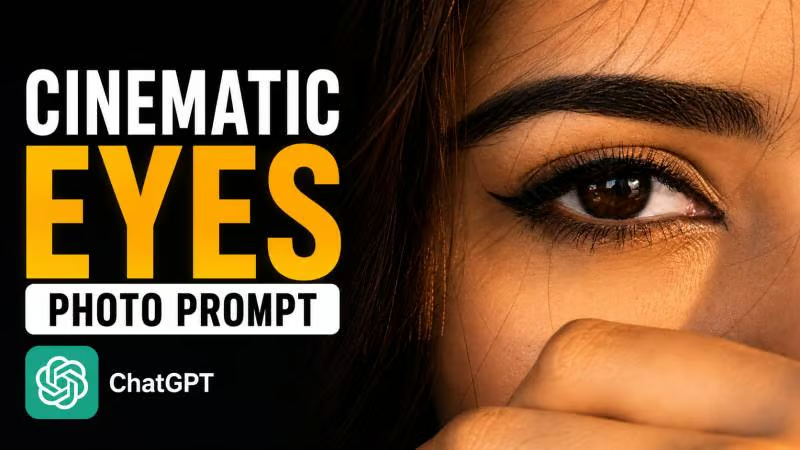

AI image generation has changed the way people create photos, art and digital content. One of the most trending things on social media right now is the Cinematic Eyes View Prompt. This style creates images from the view of someone’s eyes making you feel like you are actually inside the scene. The result is a highly immersive, realistic image, as though it was shot through human vision rather than a regular camera.
Whether you’re creating content for Instagram, TikTok, YouTube Shorts or just playing around with AI art, the Cinematic Eyes View Prompt can help you generate unique visuals that grab attention instantly. In this article, we’ll explain what the prompt is, why it’s trending and how to use it effectively.
What is a cinematic eye view prompt?
A Cinematic Eyes View Prompt is a unique type of AI image prompt that is specially written to create photos from first person point of view. But instead of showing a person standing in front of the camera, the AI generates an image that represents what the person is seeing through their own eyes.
This perspective makes for a real and emotional experience. It’s like walking down a beautiful street, sitting in a luxury car, walking through a forest, standing on a mountain, or looking at a city skyline at sunset.
The cinematic style provides dramatic lighting, realistic shadows, depth of field, detailed textures and movie-like color grading, making every image look professional.
Why is This Prompt Trending?
The Cinematic Eyes View Prompt is extremely popular for offering a different point of view, as opposed to the regular AI portraits.
Why do creators love it? Here are a few reasons:
Creates immersive first person scenes.
Creates cinematic lights that look realistic.
Great for storytelling content.
Boosts social media post engagement.
Looks like professional movie shots
Works great with most AI image generators.
Easy to change for different environments.
These visuals tend to be more engaging and attract more attention on social media platforms as viewers feel like they are inside the image.
Cinematic Eyes Key Features View Images
A good image from a Cinematic Eyes View will usually contain some important visual elements.
First Person Viewpoint
The subject’s eyes are used to view all which gives a realistic viewing experience.
Natural Visibility of Hands
Sometimes the AI adds in hands reaching for things, holding coffee, opening doors, driving a car or interacting with the environment to make it more realistic.
Cinematic Lighting
Visually appealing scene with golden hour sunlight, soft shadows, neon lights, moonlight, or dramatic indoor lighting.
Aperture and Depth of Field
The subject is in focus just like a professional camera lens, the background is naturally blurred.
High Quality
Buildings, roads, clothes, trees, reflections and skin have very detailed textures.
Color Correction
The last picture is realistic and high quality with professional movie-inspired color tones.
Best Prompt Settings to Apply
One of the best things about this prompt is that it’s flexible. Works like a charm in almost any environment.
Typical scene ideas are:
Walking the streets of Tokyo.
Driving a luxury sportscar.
On a private jet.
Hiking in snow-capped mountains
Lying on a tropical beach.
Exploring Old Castles
Visiting futuristic cities.
Fireworks at night time.
Inside a luxury hotel.
On top of sky scrapers
Each location creates a totally different vibe but keeps the cinematic first-person feel.
Tips to improve AI results
Use detailed descriptions in your prompt to generate more realistic images.
Include information such as:
Camera angle.
Light conditions.
Time of day .
Weather.
Environment
Clothes.
Position of the hand.
Lens impact.
Ultra realistic texture.
HDR quality.
8K resolution.
Cinematic colour grading.
The more descriptive your prompt is, the better the AI will understand your creative vision.
Example of Prompt Structure
Every AI platform works differently now, but a good prompt usually looks like this:
Perspective + Environment + Lighting + Subject Interaction + Camera Details + Quality Settings
For instance:
First person cinematic eyes walking through a rainy neon street at night, visible hands holding an umbrella, reflections on wet roads, realistic lighting, shallow depth of field, ultra detailed textures, cinematic color grading, hdr, 8k, highly realistic.
The same structure can be easily adapted for thousands of different scenes.
Top AI Image Generators
The Cinematic Eyes View Prompt is compatible with many modern AI image generation tools.
Some popular choices include:
ChatGPT Image Generation
Midjourney Flow
Google Imagen Stable Diffusion Ideogram Leonardo AI Adobe Firefly
Each platform has its strengths, but more detailed prompts tend to give better results across the board.
Mistakes to Avoid
Many beginners fail to get the results they want because their prompts are too short or miss some important details.
Common mistakes to avoid:
Using very short cues.
I forgot to say first person perspective.
Lighting conditions may be ignored.
No context on the environment.
No cinematic style is mentioned.
Forgetting real camera settings .
By using contradictory descriptions.
A well-organized, clear prompt almost always works better.
Who Can Use This Prompt ?
The Cinematic Eyes View Prompt is good for just about everyone including:
Content producers
YouTubers.
Insta stars.
TikTok creators .
Graphic designers.
Digital Artists
Marketers.
Bloggers
People who like photography.
AI art newcomers.
If you’re a professional content creator, or just love to experiment with AI, this prompt will open up endless creative possibilities.
Final Thoughts
The Cinematic Eyes View Prompt is one of the most exciting trends in AI images as it turns ordinary scenes into an immersive cinematic experience. It creates images from a realistic first person perspective that provides a unique experience of being in the environment, which creates a sense of immersion for viewers.
With the right perspective, lighting, environment, and cinematic effects, together you can produce incredible AI-generated visuals that will pop on social, websites, blogs, and digital portfolios. As AI image generation technology continues to improve, prompts like these will become even more powerful, giving creators an infinite number of opportunities to generate realistic, engaging, and visually stunning content with just a few carefully chosen words.
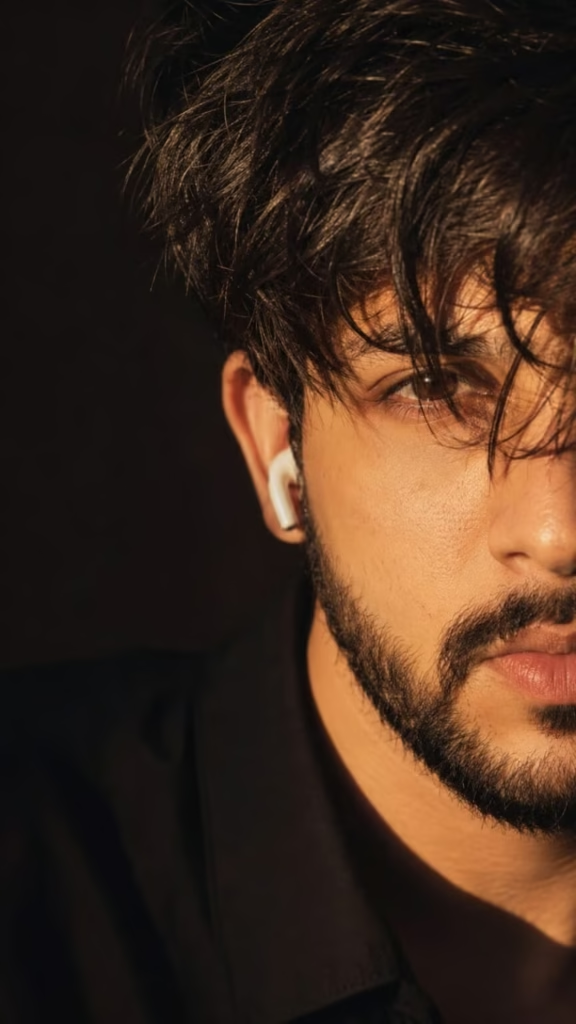
identity reference. Preserve the person’s face, facial structure, eye shape, skin tone, hairstyle (where applicable), beard, lips, nose, and overall identity 100% exactly. Create an ultra-realistic cinematic vertical close-up portrait (9:16). Show only the right half of the face, with the left half completely cropped out of the frame. Camera at eye level, extreme close-up from forehead to lips. Thick messy black hair with textured strands falling naturally across one eye. Sharp focus on the visible eye with realistic catchlight. Strong warm golden-hour sunlight hitting the face from the right side at a 45-degree angle, creating deep dramatic shadows and high contrast. Natural skin pores and realistic facial texture, trimmed beard and mustache, neutral confident expression. Wear a black shirt blending into a dark brown-black background. Add a white wireless earbud in the visible ear. Minimal background, shallow depth of field, DSLR photography, 85mm lens, f/1.8, Kodak Portra-inspired warm tones, cinematic color grading, soft highlights, rich shadows, ultra-photorealistic, 8K, editorial fashion portrait, highly detailed.
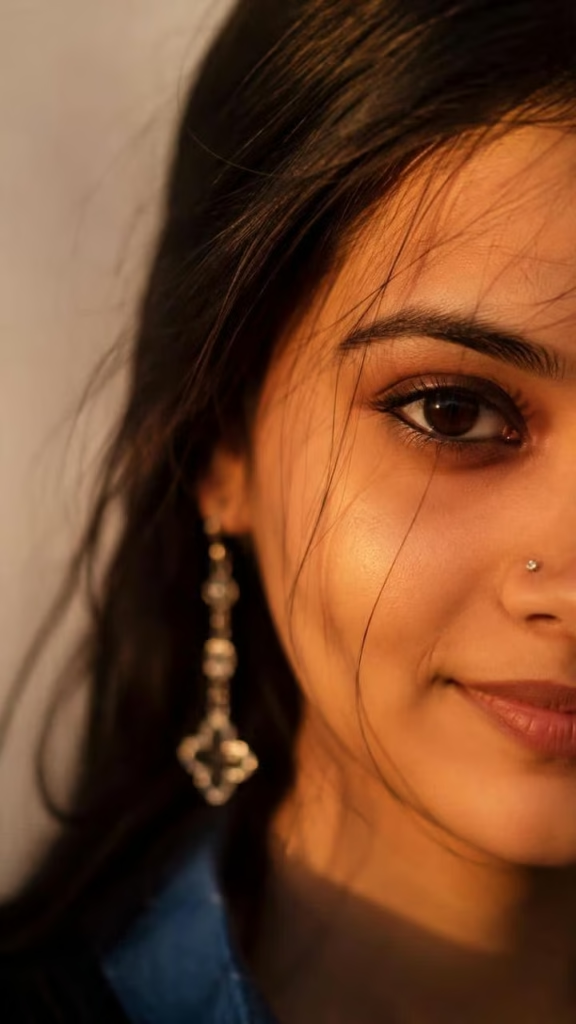
Ultra-close cinematic portrait of a young woman, only half of her face visible, warm golden-hour lighting, soft amber tones, loose dark hair strands falling across her face, deep brown expressive eye in sharp focus, subtle natural makeup, small nose piercing, glossy natural lips, long dangling silver earring, dreamy and intimate mood, shallow depth of field, creamy bokeh background, soft shadows, high skin texture detail, photorealistic, DSLR photography, 85mm lens, f/1.4, warm color grading, moody aesthetic, editorial beauty shot, ultra-realistic, 8K quality.